Pages

Showing posts with label Tidal Zone. Show all posts

Tuesday, 5 April 2016

Thinking and Behaving Like Scientists

Thinking and Behaving Like Scientists:

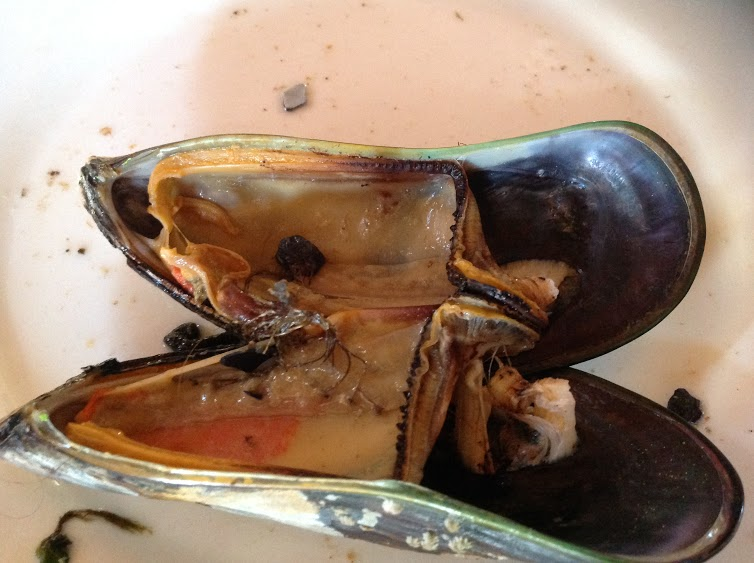
We had another close up look at Mussels today.  As we observed them we noticed some amazing things.
  • There shells actually have growth rings on them
  • There are whole ecosystems living on, in and around Mussels (we found Chitons, Limpets, other Mussels, Crabs and Seaweeds living on or in them)
  • We found the Mantle which is the outer part of the flesh of the Mussel.  It is the Mantle which ‘makes’ the new shell, secreting minerals to build it.
  • We noticed the Mussels smelt strong, of the sea or seaweed, very salty!
  • We noticed the difference between male and female Mussels (the females are orange and the males are white).
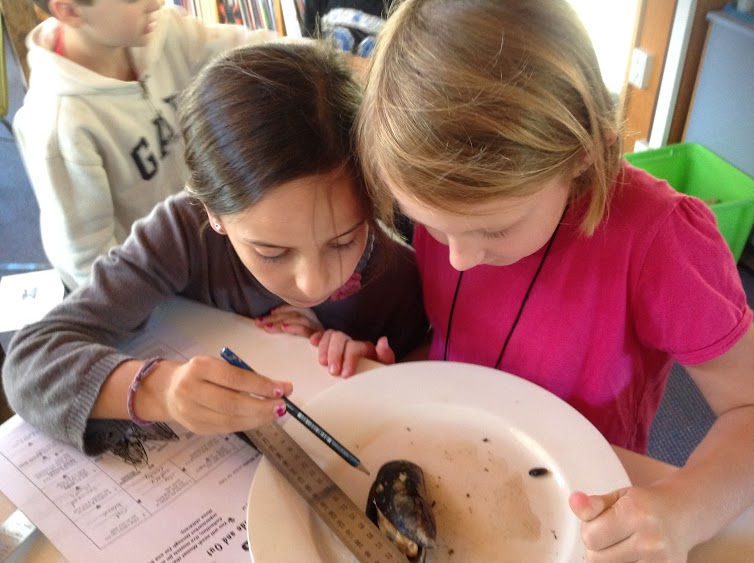
As we have been looking at the creatures which live in the tidal zone we are noticing how amazing, and how varied they all are.  The more you look the more you discover!

Monday, 21 March 2016

What is That Creature?

What is This Creature?
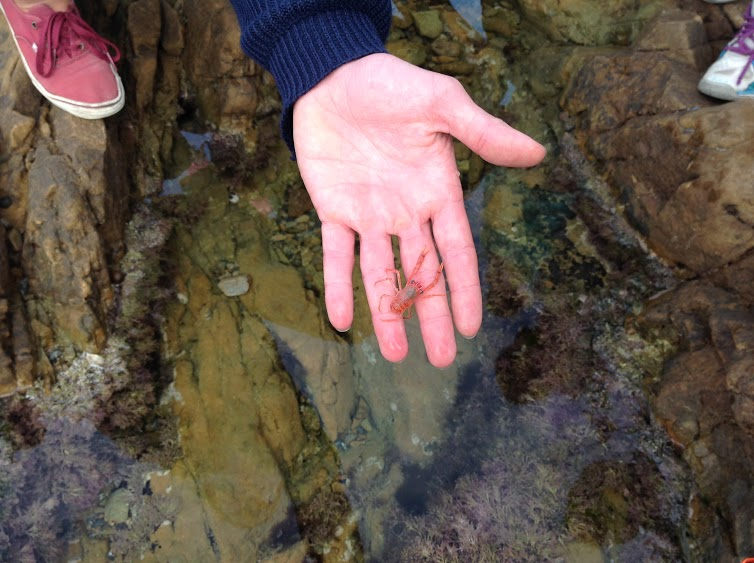
Is it some sort of Crayfish, Shrimp, Super Mutant?

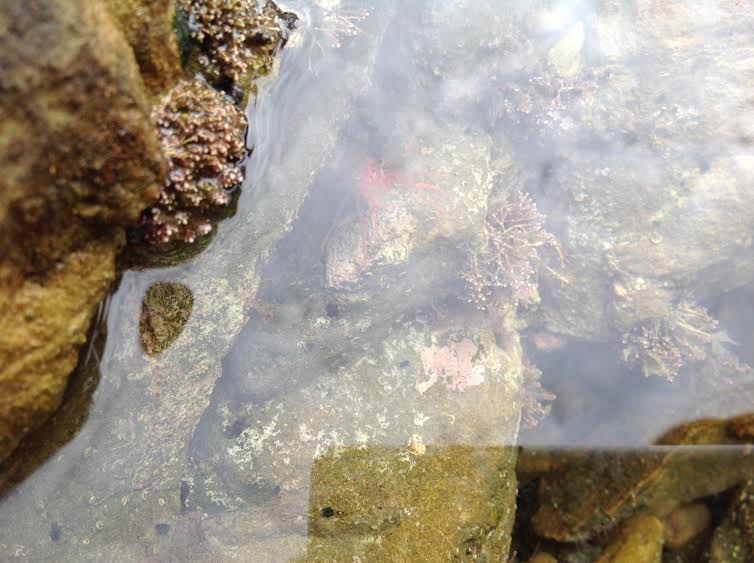
Great scientists are curious about the world they live in.  Getting into the rock pools on the edge of the Island Bay Marine Reserve our students made the types of discoveries great scientists with their sharpened senses and substantial powers of observation might make.   A very aggressive creature: was it guarding its corner of the rock pool or was it hunting prey when it raised its two pronged pincers and attacked?
Can you see it in the rock pool?  It is actually staring at the photographer!

We asked Christine from the Marine Centre what it was but she said she had never before seen anything like it.  Have we discovered a new genus?  Can you help us to identify this rock pool inhabitant?

Thursday, 3 March 2016

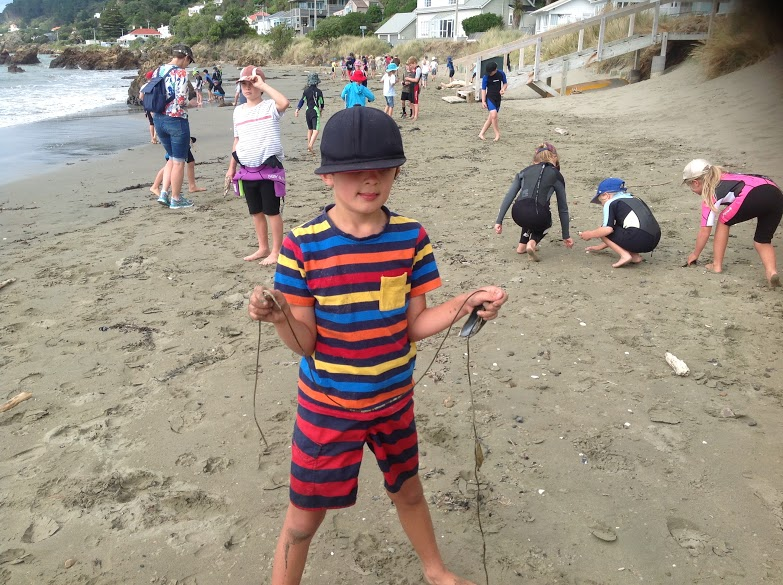
Beach Treasure Hunt

Beach Treasure Hunt


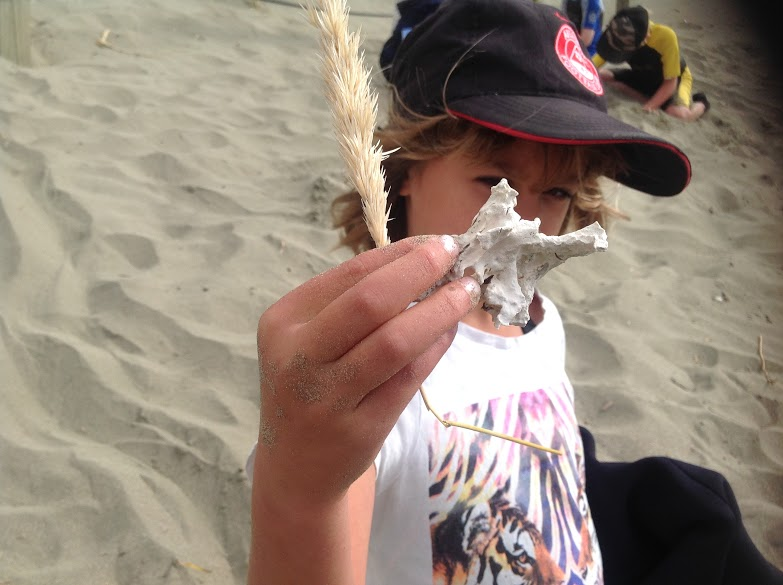
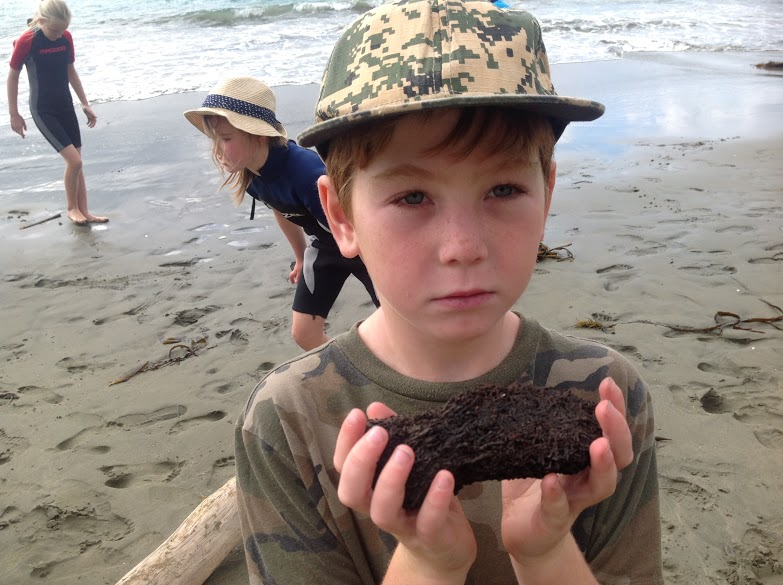
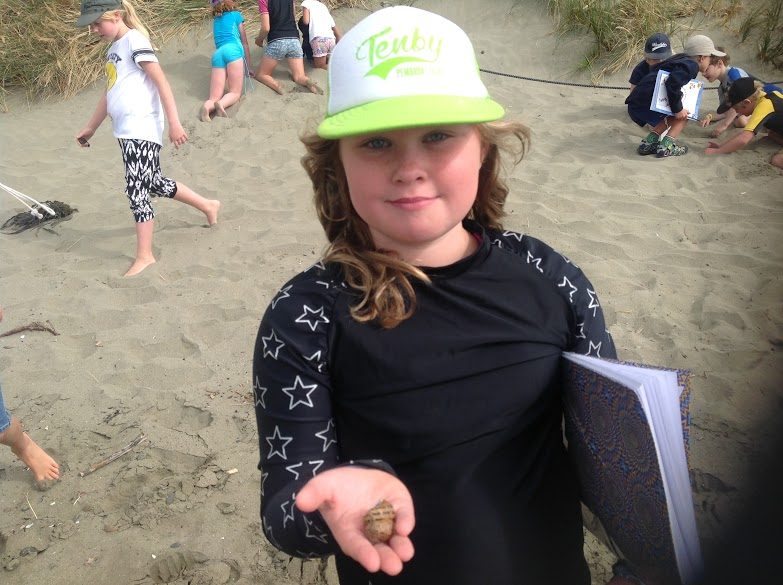
Everybody knows that the beach is full of treasures.  We are looking at all of the species of shellfish, seaweed and plants that we have found washed up on the beach.  We are observing closely and beginning to think like scientists.

How does a change in environment affect what's in a marine metre squared?

Yesterday we went to Worser Bay beach at high tide and, amongst a lot of other activities, most of us did another marine metre squared investigation. We are learning to be better scientists:
 - there was more focus on inquiring only into the metre squared on this trip (even though there was less to see),
 - the teams worked better together, and
 - all teams were better at using the guide to work out exactly what they were observing and recording that.

We could all see that the tide really affected what we could see on the beach and that different animals and plants inhabit different parts of the beach.

We were also inquiring into the tides and attempted to put up a post that we could observe to see how far up it the tide rose. But nature won the day and the post fell down despite a rescue effort or two... There was quite a big southerly swell on the beach - good for boogie boarding though!.

Thanks to all the parents who came and supported our trip - we couldn't do it without you!

Thursday, 11 February 2016

Our Changing Coastline Inquiry.

Our Changing Coastline Inquiry.

We are very excited to have begun our Inquiry with a trip to stunning Worser Bay Beach on Wednesday. This was the first activity in Tuning in to this Inquiry. (Read more about it on the blog post What’s in The Rockpool?)

This year the theme is ‘Change’.  We will begin by exploring some of the change evident in our immediate environment.  We have already been able to make strong connections to the work we did last year, using the words Flora and Fauna to describe the plant and animal life we have observed.  There is a strong science focus.  We are encouraging students to be observers, to look closely and carefully and to ‘look’ with all of our senses.  It was interesting to see that some people tried eating some of the seaweeds today.  They were ‘observing’ with their taste buds!

We will be doing some detailed ‘Finding Out’ about particular species which live in the tidal zone.  We will then move to a Scientific Investigation in which kids will be able to predict, observe, explore, test and come up with their own explanations of the phenomena which they are investigating.  This will be very ‘hands on’.

Of course this means more time at the beach!  And, because we will be there we are planning to do more sailing and kayaking, taking advantage of the brilliant weather we have been having.  More on this later.