Pages

Showing posts with label geology. Show all posts

Thursday, 18 June 2020

Geology Around Us!

Some of us have continued to find out more about how the land is formed and what rocks types we have all around us.

So we went on a small field trip to, you guessed it, Worser Bay Beach.  These are some of the photos we took of the rock forms we are interested in.  Most of them are Sedimentary rocks but there were some surprises and we ended up with some really interesting questions to explore.
Rock explorer!


There are so many interesting forms!
Do the red rocks contain iron? What are the white rocks made of?  Are the round deposits in the sandstone volcanic by any chance because they look as if they are?  If this is the case, what volcano do they come from?

Are these volcanic deposits?  Let's find out!


Thursday, 21 May 2020

How is Limestone Formed?

We spent the day on Thursday thinking about how the land is formed.  We realised that the land; mountains, hills, valleys and beaches are constantly changing.  Zoe said that the thing that causes mountains to change shape and send sediment towards the sea is, "water and time."
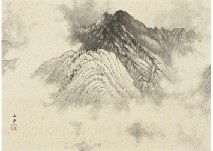
Mountains after rain by Gyokudo Kawai on artnet 

Our focus was on Limestone, one of the sedimentary rocks.  We were exploring how the calcium in shells, when heated and/or compacted cause rock to form.
In our first experiment we put shells in vinegar.  The acetic acid in vinegar went to work on the alkaline (base) of the shells (calcium)


  Sea shells are made of calcium carbonate The vinegar breaks down the carbon, turning it into carbon dioxide.  We saw the carbon dioxide bubbling around the shells.  It blew up the balloon!
We placed shells in a bottle with vinegar.  As carbon dioxide was released from the shells it blew up the balloon!


In the youtube channel, Primitive Technology, a type of cement was made by burning shells.  This has the same effect, burning off the carbon.  Carbon dioxide remains and this can then be ground up and turned into a cement like product.  We used Pāua shells as a mould.  It is great to do hands on activities to make discoveries in science.


The raw shells were cooked in the pizza oven.


This is our Limestone made from burnt,  ground up shells.  It is in a Pāua shell mould.

This diagram explains the what is happening when rocks form.

Wednesday, 11 December 2019

Transition Day - Tectonic Plate Shifts

Today we worked in 2020 learning groups. We said 'Nau mai, haere mai' to our 2020 year 4 whānau for our first of two transition mornings.

We are thinking about Aotearoa's unique flora and fauna. This meant we had to do some thinking about how New Zealand got to be where it is.

This activity, where we peeled a mandarin and tacked its skin back on after, allowed us to explore how tectonic plate shifts affect the surface of our sphere - Earth!


 The earth is spherical like the mandarin, although it is difficult to see the roundness of the earth except from space. The peel represents the earth’s crust. The cracks are called faults and it is the shifting of the plates (peel) which causes earthquakes and volcanic activity.


Nik's (2020) Base Group came up with these key ideas:

  • The peels (plates) move around on the mandarin (Earth)
  • The peels (plates) don't fit back together like a jigsaw after they've broken apart
  • In some places the peels (plates) overlap and push up (creating mountains)
  • In other places, the peels (plates) have huge, deep gaps (like oceans and their trenches).


We're all very excited to be working together next year, kei te pai i a mātou!

Wednesday, 24 February 2016

Our trip exploring legends about Kupe, geology of Wellington and conducting marine metre squared investigations

On Monday 22 February, we went for a school trip past Worser Bay and Seatoun Beach. We stopped along the way at the pou at Seatoun beach. We heard stories about Kupe and the wheke and how his nieces (Matiu and Makaro, the names of the big islands in the harbour) scratched themselves in mourning after they believed Kupe had died so much that they bled and the rocks at Red Rocks turned red from their blood. We walked up the hill to the pa site with another pou and sketched our surroundings. 


Deb (Elliot's mum who is a geologist) talked to us about how the land around us had changed over time and how the big rocks that came from the Hutt river transformed and became smaller and smaller and smoother until they became sand.

Once we walked around the corner from Breaker Bay we set up our metre squared. In our learning groups we laid out our metre squared and looked carefully and lifted up rocks to find animals and sometimes we saw little things moving under seaweed so we moved the seaweed. We recorded what types of sea life we found different types of - starfish, crabs, mussels, baby paua, limpets, sea cucumbers, sea snails and seaweed. We found a lot more life than we expected in 1 metre squared. We were amazed, astonished and proud that we found so much more than we expected to find!


We want to do some more metre squared investigations - you should try it too! Thanks to all the people who came out and helped us to achieve this learning experience.


I learned that there was a pa site above Seatoun - Louise.
I learned that most of the land near the beach was under water before the earthquakes- Raiha.
I learned that the islands were names after Kupe's nieces - Charlie.
I was curious about how snails eat  - Alyssa.

By Louise, Charlie, Raiha, Alyssa and Gabrielle

Friday, 20 February 2015

Shaky Wellington


Deb came in today to talk about the physical geography of Wellington. 


She showed us this Gondwana animation:


The Ring of Fire is an area where a large number of earthquakes and volcanic eruptions occur in the basin of the Pacific Ocean. New Zealand is on the Ring of Fire

Why is New Zealand wildlife unique? 

What is significant about flightless birds such as the Kiwi and the Takahe?

Thursday, 19 February 2015

Mount Victoria

We went to Mount Victoria to look at the geology of Wellington.


A big thank you to Deb and Will who spoke to us about how the landscape of Wellington was formed. 


To find out more about the geology of Wellington: 


Questions to consider and discuss at home: 

  • How was my backyard made/formed (Geology)?
  • How has our Geology affected our flora and fauna?

Mount Vic Trip from Matariki on Vimeo.

To find out more about tectonic plates: